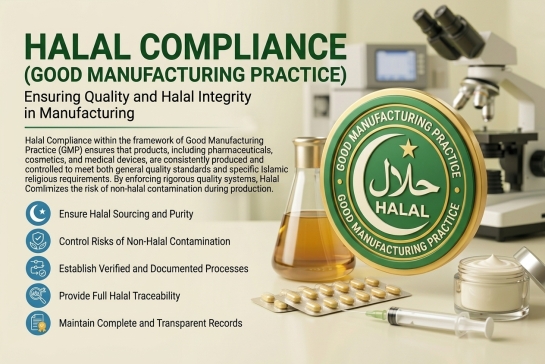

HALAL Certification: Concept, Key Aspects, Requirements, and Benefits
What is HALAL Certification?
The word "HALAL" in Arabic means permissible, lawful, and acceptable according to Islamic law (Shariah).
HALAL certification confirms that products or services have been prepared, processed, or manufactured in accordance with Islamic principles and are free from any prohibited (Haram) substances or processes.
Key Aspects of HALAL Certification
1. Ingredients
HALAL certification verifies that all ingredients used in a product or service are permissible according to Islamic dietary laws. This includes ensuring the absence of the following:
- Pork and its derivatives;
- Alcohol;
- Other substances prohibited under Islamic law.
2. Processing
Production and processing facilities must meet specific requirements to prevent cross-contamination with non-HALAL products. Additionally, the equipment, machinery, and tools used in the production process must be free from contamination.
3. Hygiene
Cleanliness and compliance with hygiene requirements are fundamental to HALAL certification. Production units must:
- Maintain high standards of cleanliness;
- Control the sanitary conditions of the production environment;
- Ensure staff observe proper personal and occupational hygiene practices.
4. Slaughter
For meat products, animals must be slaughtered according to the Islamic method (Zabiha or Dhabiha). This process includes:
- Observing religious principles;
- Reciting specific invocations and prayers;
- Using approved methods to ensure the meat is HALAL.
5. Documentation
The HALAL certification body evaluates the entire production process and issues documentation to confirm compliance. This documentation is typically presented to consumers in the form of:
- A HALAL certificate;
- A HALAL mark or logo on the product packaging.
HALAL certification is particularly important in the food and beverage industry, but it also applies to other sectors where compliance with ethical principles and Islamic requirements matters, such as:
- Cosmetics and personal care products;
- Pharmaceuticals;
- Islamic financial services.
HALAL certification assures that products or services have been prepared, processed, or manufactured in accordance with Islamic principles and are free from any prohibited (Haram) substances or processes.
Is HALAL Certification Different Across Countries?
Yes. Different countries may have different HALAL certification organizations or bodies. These organizations are responsible for:
- Inspection;
- Auditing;
- Evaluating processes;
- Verifying compliance with HALAL requirements.
Consumers who follow Islamic dietary and ethical laws typically look for a HALAL mark or certificate on products to ensure they comply with their beliefs. However, HALAL certification is not only important for Muslim consumers; it can also appeal to other consumers who seek high-quality, clean, and ethically produced products.
What Are the Requirements for Obtaining HALAL Certification?
HALAL certification requirements may vary depending on the country, the certifying body, the industry, and the type of product; however, they typically include the following:
1. Compliance with Islamic Dietary Laws (Shariah)
Products must be manufactured in accordance with Islamic law and be free from prohibited substances such as:
- Pork and its derivatives;
- Alcohol;
- Other Haram substances.
2. Cleanliness and Hygiene
The production environment, equipment, and tools must comply with strict hygiene requirements. This includes:
- Cleaning of the production environment;
- Control of equipment;
- Staff hygiene compliance.
3. Ingredients
All ingredients, additives, flavorings, and processing aids must:
- Hold a HALAL certificate;
- Or be recognized as permissible under Islamic law.
4. Slaughter and Meat Processing
For meat products:
- The animal must be slaughtered according to the Islamic method;
- The meat processing procedure must also comply with HALAL requirements.
5. Prevention of Cross-Contamination
The organization must take measures to prevent contact between HALAL and non-HALAL products. These measures may include:
- Separate production lines;
- Dedicated warehouses;
- Dedicated equipment;
- Controlled transportation.
6. Documentation and Record-Keeping
Organizations must maintain accurate records of:
- Production processes;
- Raw materials;
- Suppliers;
- Controls implemented.
This information is used by the certification body for evaluation.
7. Third-Party Certification
HALAL certification is typically issued by independent organizations approved by Islamic authorities. These organizations:
- Conduct audits;
- Review processes;
- Verify compliance with HALAL requirements.
8. Labeling and Packaging
Certified HALAL products must be properly marked and typically use a recognized HALAL logo or mark.
9. Annual Renewal and Periodic Audits
HALAL certification is usually not a one-time process; it requires:
- Periodic renewal;
- Regular audits;
- Continuous compliance maintenance.
10. Staff Training
Employees involved in the production, storage, and processing of HALAL products may need training to properly understand and implement HALAL requirements.
HALAL certification is usually not a one-time process; it requires periodic renewal, regular audits, and continuous compliance maintenance.
Benefits of HALAL Certification
Obtaining HALAL certification can bring numerous benefits to organizations:
• Access to Muslim Markets
HALAL certification enables entry into the market of Muslim consumers worldwide. With more than 1.8 billion Muslims globally, this market presents a significant opportunity for businesses.
• Increased Market Share
In markets with a significant Muslim consumer presence, HALAL certification can create a competitive advantage.
• Enhanced Brand Trust and Credibility
HALAL certification demonstrates an organization's commitment to quality, cleanliness, and adherence to ethical requirements.
• Facilitated Export
Many countries have HALAL requirements for importing certain products, especially food. Obtaining this certification facilitates entry into these markets.
• Customer Diversification
In addition to Muslims, HALAL-certified products can also appeal to consumers who value quality, hygiene, and ethical production.
• Improved Supply Chain Processes
Implementing HALAL requirements typically strengthens:
• Quality control;
• Product traceability;
• Supplier management.
• Marketing and Branding Opportunities
The HALAL mark can serve as a differentiating factor in the market and be used as a marketing tool.
Which Organizations Need HALAL Certification?
HALAL certification is most relevant for organizations whose products or services are offered to Muslim consumers or markets with Islamic requirements. The key groups include:
• Food and Beverage Manufacturers: meat and meat products, dairy, processed products, snacks, and beverages.
• Restaurants and Food Service Companies: to serve HALAL food and gain customer trust.
• Grocery Stores and Food Retailers: to offer HALAL products to customers.
• Pharmaceutical Companies: to ensure no prohibited substances are used.
• Cosmetics and Personal Care Manufacturers: especially products containing animal-derived ingredients or alcohol.
• Islamic Financial Institutions: to ensure financial services comply with Shariah principles.
• Hotels, Tourism, and HALAL Hospitality Services: to provide suitable services to Muslim travelers.
• Transportation and Logistics Companies: to ensure HALAL conditions are maintained during transportation, storage, and distribution.
• Agricultural Farms and Livestock Producers: to produce crops and meat in accordance with HALAL requirements.
• Food Processing Equipment Suppliers: to ensure no contamination risk is introduced into the production process.
• Educational and Specialized Training Centers: to provide HALAL-related training and develop experts in this field.
Overall, HALAL certification creates numerous opportunities for market development, increasing customer trust, and facilitating exports; however, obtaining and maintaining it requires continuous compliance with requirements, periodic audits, and adherence to the certifying body's regulations.