
GMP: Objective, Scope, and Requirements
GMP covers all aspects of the production process, from the sourcing and control of raw materials to the final product, including the production environment, equipment, personnel, procedures, and manufacturing processes.
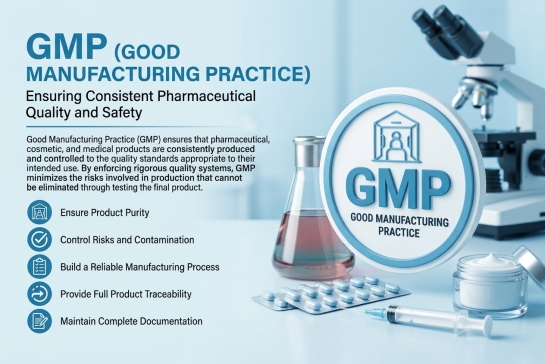
The primary objective of GMP is to reduce the risks inherent in the production process—risks that may not be identifiable or eliminable solely through testing the final product. Compliance with GMP requirements plays a vital role in ensuring the safety, efficacy, and high quality of products.
Adherence to GMP requirements helps organizations meet legal and regulatory obligations and assures customers and stakeholders that manufactured products possess the necessary quality, safety, and integrity.
The Objective of GMP
The purpose of GMP is to ensure that production processes are designed, implemented, and monitored in a manner that guarantees the quality, safety, and consistency of products.
GMP standards and requirements are developed with the aim of preventing the following issues in the production process:
- Product contamination;
- Human and process errors;
- Defects and non-conformities that could affect the safety and efficacy of the product.
GMP establishes a clear framework for implementing best manufacturing practices and ensures that these practices are consistently followed throughout all stages of production.
The implementation of GMP requirements ensures that products are manufactured under controlled and stable conditions. This is particularly critical in industries such as pharmaceuticals and food, where consumer health and safety are of utmost importance.
The primary objective of GMP is to reduce the risks inherent in the production process—risks that may not be identifiable or eliminable solely through testing the final product.
The Scope of GMP
GMP applies to various industries, particularly those that manufacture consumer products or products with a direct impact on the health and safety of consumers. The most significant of these industries include:
- Pharmaceutical industry;
- Food and beverage industry;
- Cosmetics and personal care products industry;
- Medical device industry.
GMP certification ensures that:
- Pharmaceuticals are produced uniformly, under controlled conditions, in accordance with quality requirements, and meet safety standards.
- Food products are safe for consumption and free from contaminants and harmful agents.
- Cosmetic and hygienic products are safe and free from substances harmful to consumers.
- Medical devices are manufactured safely and deliver their intended performance.
GMP requirements cover all stages of the production process, including:
- Receipt, control, and storage of raw materials;
- Production processes;
- Control of production environment conditions;
- Packaging;
- Warehousing;
- Distribution of the final product.
Compliance with GMP helps organizations bring consistently high-quality, safe products to the market that meet legal requirements and customer expectations.
For more information, please contact us.
GMP – Good Manufacturing Practices