
HACCP: Concepts, Principles, Implementation Steps, and Key Requirements
What is HACCP?
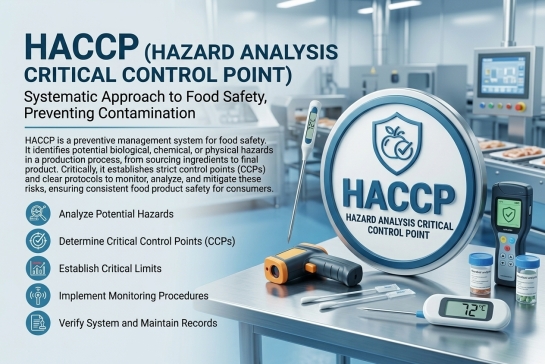
HACCP stands for Hazard Analysis and Critical Control Points. It is a preventive food safety system that helps organizations guarantee the safety of food products.
To implement HACCP in a food production facility, several steps must be carried out:
1. Identify hazards that may affect product safety;
2. Determine the Critical Control Points (CCPs) required to prevent or eliminate these hazards;
3. Establish monitoring and control procedures for the Critical Control Points.
By implementing these steps, organizations can ensure that the food products manufactured are controlled in terms of safety. Therefore, HACCP is an essential safety tool that must be considered in all food production facilities.
Key Principles of HACCP
The core principles of HACCP include the following:
1. Adherence to Sanitation Principles and Contamination Control Techniques
Maintaining hygiene in the food production process is highly important, as it helps prevent the growth and multiplication of harmful microorganisms.
2. Effective Hazard Monitoring and Control
Identifying, monitoring, and effectively controlling hazards allows potentially dangerous conditions to be detected quickly so that necessary control actions can be taken. This reduces the likelihood of illnesses resulting from the consumption of contaminated food.
3. Compliance with Good Manufacturing Practices (GMP)
Implementing GMP requirements helps ensure products are manufactured in a safe, controlled, and reliable manner. This guarantees that products are free from contamination and pose no hazard to human health.
HACCP is a preventive food safety system that helps organizations guarantee the safety of food products. Implementing HACCP involves identifying hazards, determining Critical Control Points (CCPs), and establishing monitoring and control procedures.
Fundamentals of HACCP
If you plan to prepare your food products for the market, you must comply with the requirements of the Hazard Analysis and Critical Control Points (HACCP) system.
HACCP is a system used in the food industry to prevent hazards associated with food safety.
The main phases of HACCP include:
1. Plan
In the first phase, the objectives of the food safety program must be identified, and the necessary actions to achieve these objectives must be determined. This phase includes:
- Developing an operational plan;
- Determining the schedule for plan implementation;
- Specifying the responsibilities of individuals in the process;
- Determining the required resources.
2. Do
In this phase, the developed plans are executed. Actions may include:
- Preparing food products;
- Conducting safety tests;
- Implementing corrective actions or product recalls if necessary.
3. Monitor
In this phase, production processes are continuously monitored so that corrective actions can be taken if needed. Monitoring items may include:
- Temperature;
- Humidity;
- Microbial contamination levels;
- Other indicators related to food safety.
4. Control
In this phase, the necessary actions are taken to control conditions and ensure compliance with food safety requirements.
How to Establish a Food Distribution System
One of the most critical steps in executing a HACCP plan is establishing a proper food distribution system. This involves defining the location, method, and conditions of product distribution in a way that preserves its safety and health.
In designing a food distribution system, the following factors must be considered:
- Type of food product;
- Number of people involved in the production process;
- Production location and storage facilities;
- Transportation and storage conditions;
- Nutritional characteristics of the product.
If there is any ambiguity in designing the food production or distribution system, utilizing the services of a specialist consultant can help establish a safe and effective HACCP plan.
Creating a Process Flow Diagram for Each Stage
One of the most important factors in guaranteeing the safety of the food production process is preparing an appropriate Flow Diagram.
A process flow diagram is a visual representation of the various stages of producing a product and helps to:
- Ensure all production steps are properly identified;
- Prevent any step of the process from being overlooked;
- Identify hazard points and Critical Control Points.
To produce a safe food product, you must:
- Define appropriate hygiene requirements;
- Control the flow of raw materials, semi-finished products, and final products;
- Prevent food spoilage or contamination.
Preparing a flow diagram for all production stages ensures that raw materials are properly managed and the final product leaves the factory with complete safety.
Material Labeling and Storage
To achieve better control over raw materials and food products, the following must be observed:
1. All materials used in the production process must be properly labeled with essential information, including:
- Raw materials;
- Food product labels;
- Packaging;
- Equipment and storage areas.
2. Materials and equipment related to labeling must be stored in a secure and accessible location.
3. Food products must be stored in clean, organized, and controlled conditions.
4. All food safety laws and requirements must be followed during production, storage, and consumption.
If employees do not know the correct way to handle food, consumer health may be put at risk. Therefore, continuously updating process flow diagrams and properly training employees are two fundamental factors for ensuring safe and quality food production.
Verification and Maintenance of Process Flow Diagrams
HACCP is a food safety management system that helps ensure the safety of products. The process flow diagram represents the different stages of food production and must always be updated and verified to ensure the food safety process is correctly implemented.
Process flow diagrams can be verified through:
- Review by specialists or auditors;
- Comparison with previously documented processes;
- Revision after any change in the production process.
If there is a change in production methods or operational processes, the flow diagram must also be updated. Additionally, proper maintenance of these diagrams ensures that the information is accessible and understandable for future reference.
Proper Employee Training
Employee training in HACCP principles is one of the key success factors of a food safety system.
This training must cover all aspects of the food safety process, including:
- Understanding HACCP principles;
- How to review and use process flow diagrams;
- The correct method of handling and storing food;
- Controlling hazards and preventing contamination.
If employees do not know the correct way to handle food, consumer health may be put at risk.
Therefore, continuously updating process diagrams and properly training employees are two essential factors for guaranteeing the production of safe and high-quality food products.