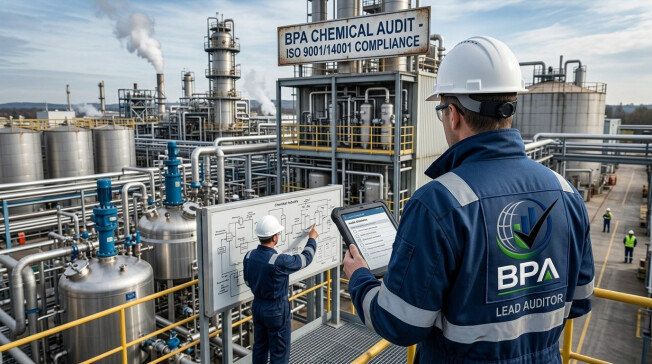

Commonly Used ISO Standards in the Chemical Industry
- ISO 9001:2015 – Quality Management System
- ISO 14001:2015 – Environmental Management System
- ISO 45001:2018 – Occupational Health and Safety Management System
- ISO 50001:2018 – Energy Management System
- ISO 22000:2018 – Food Safety Management System (for related units)
The chemical industry is subject to strict laws and regulations regarding safety, quality, and environmental protection. ISO standards provide a systematic framework for compliance with these requirements and reduce the risk of legal penalties, operational shutdowns, and administrative difficulties.
The Role of ISO Certifications in the Chemical Industry
Obtaining ISO certifications plays an important role in increasing productivity, reducing risk, and enhancing the credibility of chemical companies. The most important benefits of these standards are:
- Compliance with legal requirements and regulations
The chemical industry is subject to strict laws and regulations regarding safety, quality, and environmental protection. ISO standards provide a systematic framework for compliance with these requirements and reduce the risk of legal penalties, operational shutdowns, and administrative difficulties.
- Ensuring product quality
ISO 9001 helps organizations continuously maintain the quality of their products and services by establishing a quality management system. This standard leads to the establishment of quality control processes, product traceability, compliance with customer requirements, and increased customer satisfaction.
- Occupational health and safety management
Given the potential hazards associated with the production, storage, and transportation of chemicals, the implementation of ISO 45001 is of particular importance. This standard helps identify, assess, and control occupational hazards and protects the health of employees, contractors, and the surrounding community. It also reduces incidents and promotes a safety culture within the organization.
- Environmental protection
ISO 14001 helps organizations manage the environmental impacts of their activities. Waste reduction, pollution prevention, optimal resource consumption, and compliance with environmental requirements are among the most important benefits of implementing this standard.
- Increasing competitiveness and market development
ISO certifications are recognized and trusted worldwide. Many customers, government organizations, and large companies prioritize working with ISO-certified suppliers. Therefore, obtaining these certifications enhances the organization's credibility, facilitates the development of domestic and international markets, and creates a competitive advantage.
- Continual improvement
All ISO management standards are based on the principle of continual improvement. These standards require the organization to regularly monitor, evaluate, and correct its performance and, through corrective and preventive actions, continuously increase productivity and customer satisfaction.
In summary, ISO certifications help chemical companies, while complying with legal requirements, improve product quality, employee safety, environmental performance, and organizational productivity, and strengthen their competitive position in domestic and international markets.
Why Are ISO Certifications Important for the Chemical Industry?
- Compliance with national and international laws and regulations
- Enhancing safety and reducing occupational risks
- Ensuring product quality and consistency
- Environmental protection and sustainable development
- Increasing brand credibility and customer trust
- Facilitating entry into new markets and collaboration with international companies
- Establishing a culture of continual improvement and increasing organizational productivity
Given the potential hazards associated with the production, storage, and transportation of chemicals, the implementation of ISO 45001 is of particular importance. This standard helps identify, assess, and control occupational hazards and protects the health of employees, contractors, and the surrounding community.
Applicable Standards in the Chemical Industry
ISO 9001:2015 – Quality Management System
This standard specifies the requirements for establishing an effective quality management system and focuses on process improvement, increasing customer satisfaction, and the consistent delivery of high-quality products and services.
ISO 14001:2015 – Environmental Management System
This standard helps organizations manage the environmental impacts of their activities, reduce resource consumption, prevent pollution, and comply with environmental legal requirements.
ISO 45001:2018 – Occupational Health and Safety Management System
The purpose of this standard is to create a safe working environment, reduce incidents, prevent occupational diseases, and manage hazards associated with industrial activities.
ISO 50001:2018 – Energy Management System
This standard is suitable for organizations seeking to improve energy performance, reduce energy consumption, lower costs, and increase energy efficiency.
Responsible Care
Responsible Care is not an ISO standard; it is a global initiative in the chemical industry that emphasizes the safe production, storage, transportation, and disposal of chemicals, the protection of human health and the environment, and the continual improvement of safety and environmental performance.
GMP, GDP, and GLP
The principles of GMP (Good Manufacturing Practices), GDP (Good Distribution Practices), and GLP (Good Laboratory Practices) are among the most important quality assurance requirements in the pharmaceutical and chemical industries. These guidelines ensure that chemical and pharmaceutical products are manufactured, distributed, and tested in a uniform, controlled manner and with the desired quality, in accordance with legal requirements.
ISO Certifications for the Chemical Industry